
Treasure Coast · St. Lucie County
Port St. Lucie Real Estate Investments
The Ligon Group evaluates Port St. Lucie real estate investments across a city shaped by two very different development eras: the original pre-platted single-family neighborhoods east of I-95 and later master-planned communities extending through St. Lucie West, Tradition and the city's western growth areas.
That history matters at the property level. An older quarter-acre residential lot inside the original city can carry a very different development, utility and renovation profile from property inside a master-planned community, a Development of Regional Impact or the rapidly expanding southwest portion of Port St. Lucie.
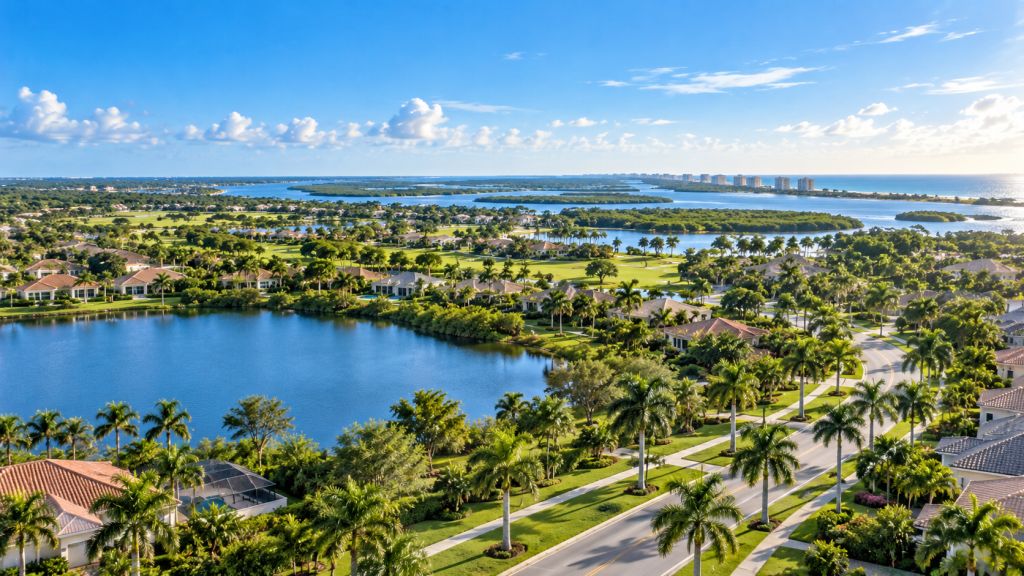
Pre-Platted City · Master-Planned Expansion
Port St. Lucie Is Really Two Development Histories Operating Inside One City.
Port St. Lucie's original development pattern began with General Development Corporation, which incorporated large areas of the city in 1961 and subdivided extensive land into primarily quarter-acre single-family residential lots.
That legacy created thousands of individual residential parcels before the city had the employment centers, mixed-use districts and transportation systems associated with newer master-planned communities.
Later expansion produced a second Port St. Lucie. St. Lucie West and major areas west of I-95—including Tradition, Southern Grove, Western Grove, Riverland and Wilson Groves—were not part of the original pre-platted city and developed through larger coordinated planning frameworks.
The Ligon Group therefore evaluates Port St. Lucie residential property according to which development system created it, what rules govern it today and what physical investment the individual asset actually requires.
Residential Market Structure
Four Port St. Lucie Environments Create Different Investment Priorities.
Older pre-platted neighborhoods, St. Lucie West, Tradition and the newer southwest growth areas should not be underwritten as though they are one uniform suburban market.
Individual Lots + Existing Housing + Renovation
Much of the original city was created as individual single-family lots. Existing homes in these neighborhoods can present renovation, infill and modernization opportunities where the asset itself matters more than master-plan branding.
Later Planned Growth Added a Different Urban Pattern.
St. Lucie West introduced coordinated residential, commercial, employment and institutional development that differs from the original GDC lot-by-lot subdivision model.
Master Planning Connects Homes With Town-Center Uses.
Tradition represents the city's large-scale western master-planned growth model, combining residential neighborhoods with commercial, healthcare, employment, recreation and transportation infrastructure.
New Neighborhoods Are Driving New Infrastructure Decisions.
Southern Grove, Riverland, Western Grove and other western development areas continue to change the city's residential geography while requiring additional roads, utilities, public facilities and mobility planning.
1961 Legacy · Quarter-Acre Lots · Existing Housing
Port St. Lucie's Original Residential Fabric Was Platted Before Much of the City Around It Existed.
Understanding the original GDC development pattern explains why so much of Port St. Lucie consists of individual single-family lots rather than conventional master-planned subdivisions.
General Development Corporation created large numbers of approximately quarter-acre residential lots for land sales, establishing the parcel structure that still defines substantial portions of Port St. Lucie.
Certain original platted areas also carry historic development rights associated with earlier state decisions that vested some property for single-family use despite later changes to planning regulations.
For investors, the practical question is not simply whether a property is in Port St. Lucie. It is whether the parcel is part of this original platted framework and what current zoning, setbacks, improvements and site constraints apply to it now.
Asset + Planning Area + Infrastructure
A Fast-Growing City Still Requires House-by-House Underwriting.
Citywide growth can support demand, but it does not eliminate the physical and regulatory risks of an individual property.
Existing homes can require roof, HVAC, plumbing, electrical, window, structural, drainage or interior modernization. Additions, pools, sheds and converted spaces can introduce permit-history or compliance questions.
Property inside newer planned communities can add association, master-plan and architectural requirements. Development near major western growth areas can be influenced by changing road, utility and surrounding land-use conditions.
The Ligon Group combines acquisition basis, physical condition, zoning, development history, permit context, utilities, stormwater, flood conditions and improvement scope before determining an investment strategy.
Tradition · Western Growth
West of I-95, Port St. Lucie Was Planned at a Completely Different Scale.
Tradition and the city's other western development areas were added after the original city and were structured through large-scale planned-development approvals rather than thousands of independent pre-platted lots.
Residential Neighborhoods Are Part of a Larger Community System.
Tradition combines housing with commercial uses, employment, healthcare, civic space, recreation and a coordinated roadway network rather than functioning solely as a residential subdivision.
Newer Residential Development Extends the City's Western Footprint.
Riverland is part of the post-GDC western growth pattern, where residential development occurs through a larger master-planned framework rather than the original lot-by-lot city structure.
Future Development Is Tied to Broader Infrastructure Planning.
Western growth creates residential value alongside practical questions involving roads, utilities, schools, parks and other public infrastructure required to support buildout.
Many Western Growth Rights Were Approved Years Before Current Construction.
The city's major western Developments of Regional Impact carry development entitlements established through earlier approvals, making current construction only one stage of a much longer planning history.
Southern Grove · CRA · Employment + Mixed Use
Southern Grove Is Not Just Another Housing Development Inside Tradition.
Southern Grove functions as a major employment, mixed-use and infrastructure district within the larger Tradition area.
The city identifies Southern Grove as a 3,605-acre Development of Regional Impact located south of Tradition Parkway and part of the larger area marketed as Tradition.
Its master plan includes employment-center, mixed-use, commercial, roadway and stormwater components, allowing job and service growth to occur alongside the surrounding residential expansion.
For nearby residential investment, Southern Grove matters less as a direct housing inventory source than as an employment, infrastructure and land-use engine influencing the larger southwest Port St. Lucie environment.
Mobility · Road Capacity · Southwest Connections
Port St. Lucie's Residential Expansion Is Forcing the Transportation Network to Evolve With It.
The city's growth pattern makes transportation capacity a real estate issue, especially in newer western and southwestern development areas.
Roads Are Only One Part of the City's Transportation Strategy.
Port St. Lucie's Mobility Plan addresses roadway capacity together with sidewalks, shared-use paths, bicycle facilities, trails and transit as the city plans for continued growth.
New Residential Growth Is Driving New Road Connections.
In 2026 the city advanced recommendations for additional southwest connectivity, including requiring developer-built road extensions intended to serve rapidly growing areas.
Interchange Capacity Is Part of the Long-Term Growth Equation.
The city supports study of an additional future I-95 interchange in the Marshall Parkway area to relieve pressure on existing Gatlin Boulevard and Becker Road access points.
Infrastructure Is Being Required Earlier in the Growth Cycle.
Current city policy increasingly emphasizes road right-of-way dedication and earlier infrastructure delivery as large western neighborhoods move toward additional buildout.
Water · Wastewater · Growth Capacity
Utility Expansion Is Part of Port St. Lucie's Residential Growth Story.
Continued housing development requires the city's water and wastewater systems to grow with the population and geographic footprint.
Port St. Lucie's adopted FY2025-26 budget includes substantial multi-year capital investment in water and sewer infrastructure for rehabilitation, upgrades and capacity expansion.
The city's capital program also includes planning for a new reverse-osmosis water treatment facility along Range Line Road specifically to increase water-supply capacity for future growth within the utility service area.
At the property level, investors should still verify whether the individual parcel has city water, sewer, only one utility service or an existing on-site system rather than assuming all Port St. Lucie housing has identical infrastructure.
Adopted Plan + 2050 Update
Port St. Lucie Is Updating Its Long-Range Plan—but Proposed Policy Is Not Yet the Same as Adopted Law.
Port St. Lucie's adopted Comprehensive Plan remains the operative planning framework while the city advances a broader update intended to guide growth through 2050.
Current Property Analysis Starts With the Plan in Force Today.
The adopted Future Land Use Map and existing development regulations remain the starting point for parcel-level zoning and development analysis.
The City Is Reassessing Growth Across All Major Planning Elements.
The ongoing update addresses land use, transportation, housing, infrastructure, conservation, economic development, public facilities and other long-range policy areas.
Draft Documents Should Be Treated as Planning Direction Until Adopted.
Proposed 2050 policies can indicate where the city is headed, but investment assumptions should distinguish pending amendments from regulations already in effect.
Future Vision Does Not Replace Today's Zoning Map.
Acquisition analysis should use current parcel zoning and Future Land Use while separately tracking proposed policy changes that may influence longer-term strategy.
Existing Homes · Renovation · Infill
Port St. Lucie's Investment Opportunity Is Not Limited to New Master-Planned Construction.
The city's original residential base creates a large and fundamentally different reinvestment environment from newer western communities.
Older Property Can Require Full Building-System Modernization.
Roof, electrical, plumbing, HVAC, windows, kitchens, bathrooms and building-envelope condition can create substantial renovation scope in established neighborhoods.
Site Configuration Can Create Value Beyond the Existing Structure.
Original platted parcels may provide yard area, driveways, pools, accessory improvements or other site characteristics that differ from denser newer subdivisions.
Existing Improvements Should Be Verified—not Assumed.
Additions, patios, pools, sheds, enclosed spaces and other modifications should be compared with available municipal records before renovation planning begins.
Established Neighborhoods Create a Different Strategy From New Construction.
Existing housing allows investment to focus on improving the property already embedded in a functioning neighborhood rather than relying solely on future community buildout.
Drainage · Canals · Flood Review
A Port St. Lucie Property Should Be Evaluated as Part of a Water-Management System.
The city's extensive canal, drainage and stormwater network is part of the physical infrastructure supporting its residential neighborhoods.
Flood conditions can vary even within the same general area. FEMA mapping, finished-floor elevation, adjacent swales, canals, road drainage and the site's impervious improvements can all influence property-level water performance.
Newer master-planned communities may operate through engineered regional stormwater systems, while older individual residential lots can rely more heavily on established neighborhood drainage infrastructure.
The Ligon Group therefore treats flood designation as one layer of site due diligence rather than the complete answer to how a property handles water.
Acquisition Through Ownership
Growth Intelligence Matters Only When It Connects Back to the Residential Property.
The Ligon Group connects Port St. Lucie's development history, zoning, infrastructure and growth environment with residential acquisition, renovation and real-property activity.
Start With the Actual Residential Asset.
Condition, acquisition basis, lot configuration, ownership circumstances and existing improvements establish whether a property supports deeper investment analysis.
Residential Acquisitions →Development History Can Change the Rules Around the Property.
Original platting, zoning, master-plan context, utilities, permit history, drainage and flood conditions can materially affect execution.
How We Evaluate Properties →Existing Homes Can Require Coordinated Building + Site Improvements.
Renovation can include major building systems, interiors, exterior work and site corrections rather than cosmetic improvement alone.
Renovation & Repositioning →Market Analysis Should Lead to Real Estate Execution.
Portfolio and project activity connects market analysis with residential property The Ligon Group has acquired, improved, owned or operated.
Portfolio & Projects →Port St. Lucie Real Estate FAQs
Direct Answers About Port St. Lucie Real Estate Investments
Residential acquisition, development-history, zoning, infrastructure and growth answers for Port St. Lucie, Florida.
Does The Ligon Group invest in Port St. Lucie real estate?
Yes. The Ligon Group evaluates residential acquisition opportunities throughout Port St. Lucie as part of its St. Lucie County and broader Treasure Coast investment geography.
Why does Port St. Lucie have so many individual residential lots?
Large parts of the original city were subdivided by General Development Corporation beginning in the early development era into primarily quarter-acre single-family residential lots sold individually.
Is Tradition part of the original platted Port St. Lucie?
No. The city identifies Tradition and other major areas west of I-95 as later growth areas outside the original GDC pre-platted city.
What is Southern Grove?
Southern Grove is a large Development of Regional Impact within the broader Tradition area and functions as a major employment, mixed-use, commercial and infrastructure district supporting southwest Port St. Lucie.
Is Port St. Lucie updating its Comprehensive Plan?
Yes. The city is working through a major update intended to guide growth through 2050. Until amendments complete the formal adoption process, current adopted regulations remain the basis for property-level decisions.
Is transportation planning changing as southwest Port St. Lucie grows?
Yes. The city continues to update its mobility strategy and in 2026 advanced additional southwest road-connection and infrastructure recommendations tied to continued growth.
Should utility and drainage conditions be checked for Port St. Lucie property?
Yes. Water, sewer, septic, lot drainage, swales, canals and flood conditions can vary by property and should be verified before acquisition or substantial renovation.
Can owners and real estate professionals submit Port St. Lucie properties?
Yes. Owners, agents, brokers, attorneys, representatives, wholesalers and other professional sources can submit residential property opportunities to The Ligon Group for consideration.
St. Lucie County + Treasure Coast Markets
Compare Port St. Lucie With the County and Nearby Treasure Coast Markets.
Port St. Lucie's pre-platted origins and master-planned western expansion distinguish it from both the county framework and older neighboring coastal cities.
St. Lucie County
The county page focuses on jurisdiction, unincorporated Future Land Use, rural-growth systems, stormwater, environmental review and regional resilience.
St. Lucie County Real Estate →Fort Pierce
Fort Pierce presents a different municipal environment centered on established neighborhoods, historic resources, Downtown redevelopment and Indian River waterfront property.
Fort Pierce Real Estate →Martin County
Martin County uses a more controlled growth framework centered on Urban Service Districts, community identity and environmental preservation.
Martin County Real Estate →Treasure Coast
Explore the broader investment geography connecting Martin, St. Lucie and Indian River counties.
Treasure Coast Real Estate →Port St. Lucie Property Opportunities
Have a Residential Property in Port St. Lucie?
Submit the property information currently available. The Ligon Group can evaluate the opportunity in the context of its physical condition, original or master-planned development history, city zoning, permit history, utilities, mobility, stormwater, flood conditions, renovation requirements, transaction circumstances and potential investment strategy.